

Written by Dr Manasi Kulkarni, Manager – Programme Development, Mission for Vision
Holding premature newborns for the first time is overwhelming. It is a mix of deep fear and fragile hope. Life inside the Neonatal Intensive Care Unit (NICU) for these premature newborns and their parents revolves around monitor sounds, long waits, and silent prayers. When I met Anisha (name changed) through Mission Nayan, her story felt like a reflection of countless mothers walking the same uncertain path.
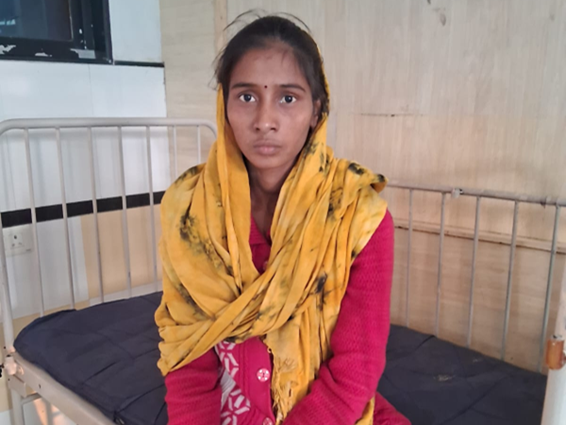
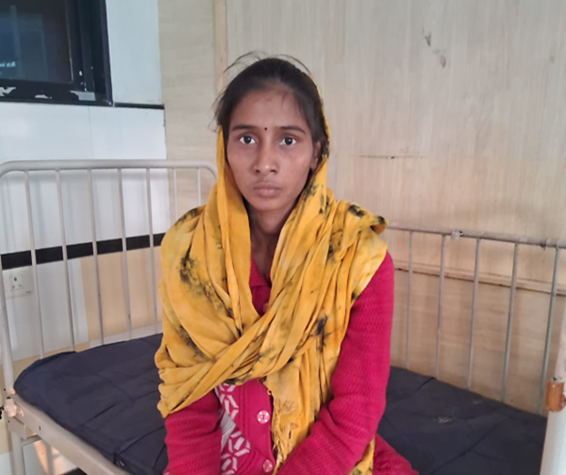
Anisha was born into a family of daily-wage labourers in Sakhali, Maharashtra. Throughout childhood and married life, her life has largely followed the rhythms of seasonal migration. Each year, she moves between Maharashtra and neighbouring Gujarat, working in sugarcane fields to support her family.
Her pregnancy in 2025 did not alter this reality. Two months into the pregnancy, Anisha migrated to Bardoli, Gujarat and continued working in physically demanding conditions. During her pregnancy, survival took precedence over care. With only one antenatal check-up and continued physical labour, she went into premature labour at just six and a half months. Far from home and without family support, she delivered a premature baby who was immediately admitted to the NICU of Sardar Smarak Hospital, Bardoli in a critical condition.
For over a month, the baby fought for life in the NICU, struggling with weak lungs and infection. Anisha could not read medical documents or fully understand what doctors explained. She depended on her husband for every decision, every form, every update.
It was during this fragile phase that Retinopathy of Prematurity (ROP) screening was conducted under the aegis of Mission Nayan programme, supported by CSR initiative of Renaissance Global Limited. The screening revealed a sight-threatening condition requiring urgent treatment. Within hours, transport was arranged for the baby by Sardar Smarak Hospital to Mission for Vision's partner - Tejas Eye Hospital managed by Divyajyoti Trust. Here, both the ROP affected eyes of the baby were treated with injections. With the baby now on a close watch through regular follow-ups, irreversible blindness was avoided just in time.
For families like Anisha’s, the burden of prematurity is not only medical. The NICU stay meant she lost all wages. Her husband faced an impossible choice many fathers silently endure, which was either staying beside his family or return to work to keep the family afloat. This is where Mission Nayan becomes more than a public health programme. It reduces the hidden and visible costs of ROP care, ensuring timely screening, referral, treatment at no cost to the families, therefore reducing the financial burden for families from marginalised backgrounds. Without this support, many parents delay or miss care, often resulting in lifelong blindness, a cost far greater than treatment itself.
Funding support makes a huge difference in this situation. It strengthens specialised eye care into NICUs, reaches families with low awareness, and protects the sight of babies born too soon. Behind every screened child is a network of care powered by compassion and commitment.
Anisha’s story reflects the realities Mission Nayan seeks to address. Across empanelled NICUs, the programme works to ensure that vulnerable premature infants are screened on time, referred appropriately, and treated without delay, particularly in settings where awareness is low and access to specialised eye care is limited.
For families like Anisha’s and many others, timely ROP screening is not just a medical intervention, it is a lifeline that ensures premature survival does not come at the cost of lifelong blindness.
About the Author:
Dr. Manasi Kulkarni is the Manager, Programme Development, Mission for Vision, where she leads Mission Nayan and Mission Jeevan programmes focused on preventing avoidable blindness among premature newborns and children by strengthening access to timely screening, treatment, and pediatric eye care services.